











Part 1 - From Designing Campaigns to Designing Decisions. How Agentic CRM Will Change the Marketer's Role
What if marketing no longer meant designing dozens of scenarios?
Imagine you no longer need to build a separate automation path for every user behavior.
Instead, you define a goal. For example: increasing long-term customer value.
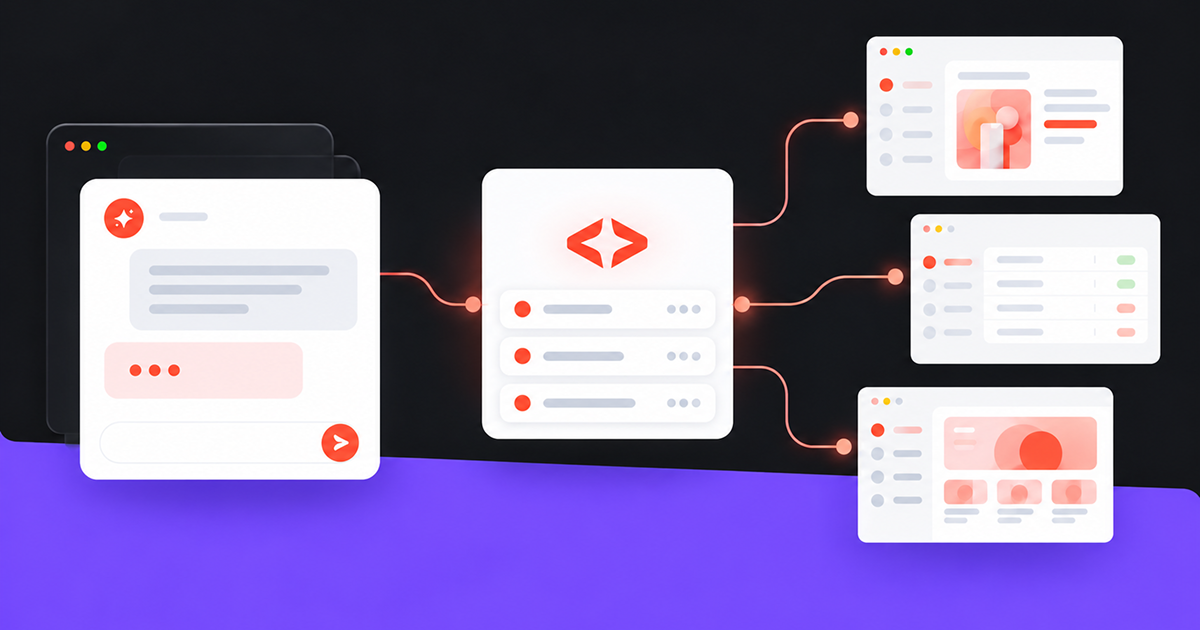
You set the rules: how often the user can be contacted, which channels are available, which actions are business priorities. The system analyzes customer data and on that basis selects the most appropriate action — a message, a channel, a timing, or… no communication at all.
Sounds a bit like science fiction? Maybe. But this is exactly the direction in which CRM and marketing automation systems are beginning to evolve.
It's not that the system will suddenly "do everything on its own." It's about a shift in approach: from manually designing every path to building decision-making logic.
And that's precisely what the concept of Agentic CRM describes.
Agentic CRM as a direction of development
Agentic CRM is not just another AI feature you "bolt onto" an existing workflow. It's more of a way of thinking about how a system can support decision-making in marketing and sales.
In what is called the agentic approach, the focus gradually shifts from manually designing every possible path to defining goals and operating rules. This does not mean full autonomy or a system that "figures everything out on its own." It's more about reducing the number of detailed "if A, then B" scenarios and replacing them with decision frameworks in which the system can select a more appropriate action.
The system still operates based on the logic you have designed. The difference is that it doesn't need a separate instruction for every possible situation. It receives a goal, access to specific data, and clearly defined constraints. Within those boundaries, it can choose the option that best fits the user's current situation.
In this context, the concept of context becomes increasingly important. A decision is not based on a single condition alone — it may take into account a set of signals analyzed together. These could include purchase history, current on-site behavior, funnel stage, responses to previous messages, engagement level, or product availability. In the classic model, much of this information ends up in reports and is analyzed only after the fact. In more advanced systems, some of that analysis can be moved closer to the moment of customer interaction.
In practice, this means the system can support decisions about whether to send a message, through which channel, and with what content. It might suggest email over push notification, an educational resource over a discount, or recommend routing a lead to a sales rep instead of continuing nurturing. It can also help assess whether it's better to pause communication at a given moment. This is not a fully autonomous decision, however, it's a dynamic adjustment within pre-established rules.
Greater automation does not mean less control. On the contrary — it demands a very precise definition of goals and constraints. You decide whether the priority is short-term sales or long-term customer value. You set maximum contact frequency, budget and discount limits, business priorities, and compliance rules. The system operates only within those parameters.
The biggest change, then, concerns your role. Instead of designing dozens of detailed scenarios, you increasingly design the logic of decision-making. You move from asking "what should this campaign look like?" to asking "what decision should the system support in this situation, and based on what data?"
It's a subtle but significant difference. If the goal is set solely to maximize short-term revenue, the system will support actions aimed at quick results. If the overarching goal becomes long-term relationship value, decisions will be more measured and will take customer experience into account.
Agentic CRM is therefore not about "magically" automating everything. It's about organizing and partially supporting the decision-making process based on data and clearly defined rules. Technology becomes a tool for executing strategy. The system will operate exactly as you define its goals and boundaries, which is why this change is primarily about the marketer's way of thinking, and only secondarily about tools.
Classic Marketing Automation vs. Agentic CRM
What Comes Next?
We've only scratched the surface. Understanding the concept of Agentic CRM is one thing — seeing how it plays out in practice is another.
In Part 2, we'll take a closer look at the concrete implications of this shift: what new competencies marketers will need to develop, where the real risks and limitations lie, and what the first steps toward an agentic approach might look like for your organization.
Because redesigning your thinking is easier said than done — and the details are where it gets interesting.
Stay tuned.