



















What if marketing performance started with what the company already owns?
According to Statista's projections, 392.5 billion emails are exchanged every day worldwide in 2026, and every single one of those messages ends with a signature. That figure, however, says nothing about any given company: the exercise becomes far more meaningful internally, by multiplying the number of employees by the daily volume of outbound emails, then applying the actual open rate. And yet, in most marketing departments, this channel appears in neither the action plans nor the dashboards, while substantial budgets keep being allocated to paid acquisition. This imbalance deserves scrutiny, because it reveals some deeply ingrained reflexes in the profession.
A blind spot that has an explanation
The first explanation comes down to habit. Faced with a lead shortage, the reflex is always the same: Google Ads, Meta, LinkedIn... These levers are reassuring because they're visible and promise an almost mechanical flow of contacts. The signature, meanwhile, gets filed under nurturing: it reaches customers, partners, engaged prospects. That is precisely what makes it powerful. The message arrives within an open conversation, carried by an identified person. Where a cold ad has to earn its right to attention, the signature benefits from it by design, which is why its click-through rates are structurally higher. Yet the targets set for teams reward acquiring new customers more than amplifying existing relationships.
The second explanation is structural. The signature's return on investment is implicit, less legible than a cost-per-lead displayed in real time. Herein lies the paradox: a perfectly trackable channel remains absent from performance dashboards. Dashboards primarily track what costs money; whatever doesn't generate spend escapes the pressure of reporting, and therefore attention. Because it isn't measured, the channel remains underestimated from end to end, from strategy through to budget allocation.
Getting back to basics isn't just a slogan
Context is changing the equation. Budgets under strain, profitability targets that are hard to hit, algorithms that can flip without warning: a channel performing well in January can collapse by March, and generative answers are upending entire strategies. Dependence on major advertising platforms, their auctions and their rules, is becoming a strategic risk, compounded by data sovereignty concerns.
Owned channels offer what's missing elsewhere: full control over the message, the timing, and the data. The email signature is the purest example of this, at a marginal cost close to zero and with total deliverability, since it travels alongside a legitimate message the recipient is already expecting. Its exposure frequency is also considerable without requiring recurring creative effort — a single design stays active for several weeks across every recipient. Returning to basics means asking what the company already owns and can amplify before looking elsewhere.
Four conditions for turning it into a performance lever
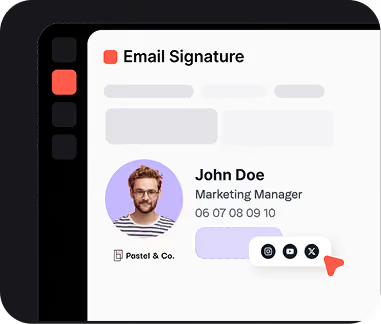
The first is to treat the signature as a channel in its own right: segmenting it by department (HR, sales, marketing, communications) and prioritizing campaigns between an ongoing core message, one-off communications tied to current events, and strong, time-limited announcements.
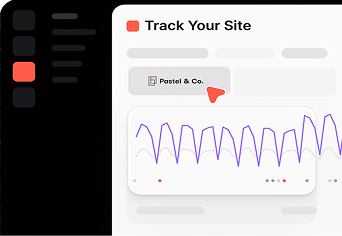
The second is measurement. The channel needs to be tracked like any other: UTMs, click-through rates, conversions, traffic attribution, performance by team. These metrics already exist and simply need to be integrated into dashboards with the same rigor applied to paid levers.
The third is industrialization. This near-zero cost doesn't exempt the channel from investment — a more modest one than elsewhere, but still needed to structure and automate it. Manual management multiplies human dependencies and ends up costing more than it delivers. Automating deployment and scheduling turns a recurring, low-value task into a reliable lever.
The fourth, specific to the signature and often overlooked, is pacing. An identical banner shown for six months to the same recipients disappears from view; rotating it two to four times a year is generally enough to preserve attention. This requires a deliberate trade-off between brand consistency and department-level personalization: too much uniformity and the message loses relevance, too many variants and the visual identity gets diluted. It also means calibrating expectations: the signature exposes a message to an audience that hasn't asked for it at that moment, and its click-through rates should be read against that benchmark, not against that of an intent-driven search.
Finally, these conditions call for restraint. An overloaded signature weighs down the message and can hurt the deliverability of the whole email, and in some sectors, mandatory legal disclosures leave almost no room for a banner at all. The signature will therefore not replace paid acquisition and won't suit every organization to the same degree. But at a time when marketing is rediscovering its owned assets, it stands as one of the most profitable — and most underused — resources a company has at its disposal.