













AI Overviews Is Finally Coming to France. Here's Why That Changes Everything for Your Visibility.
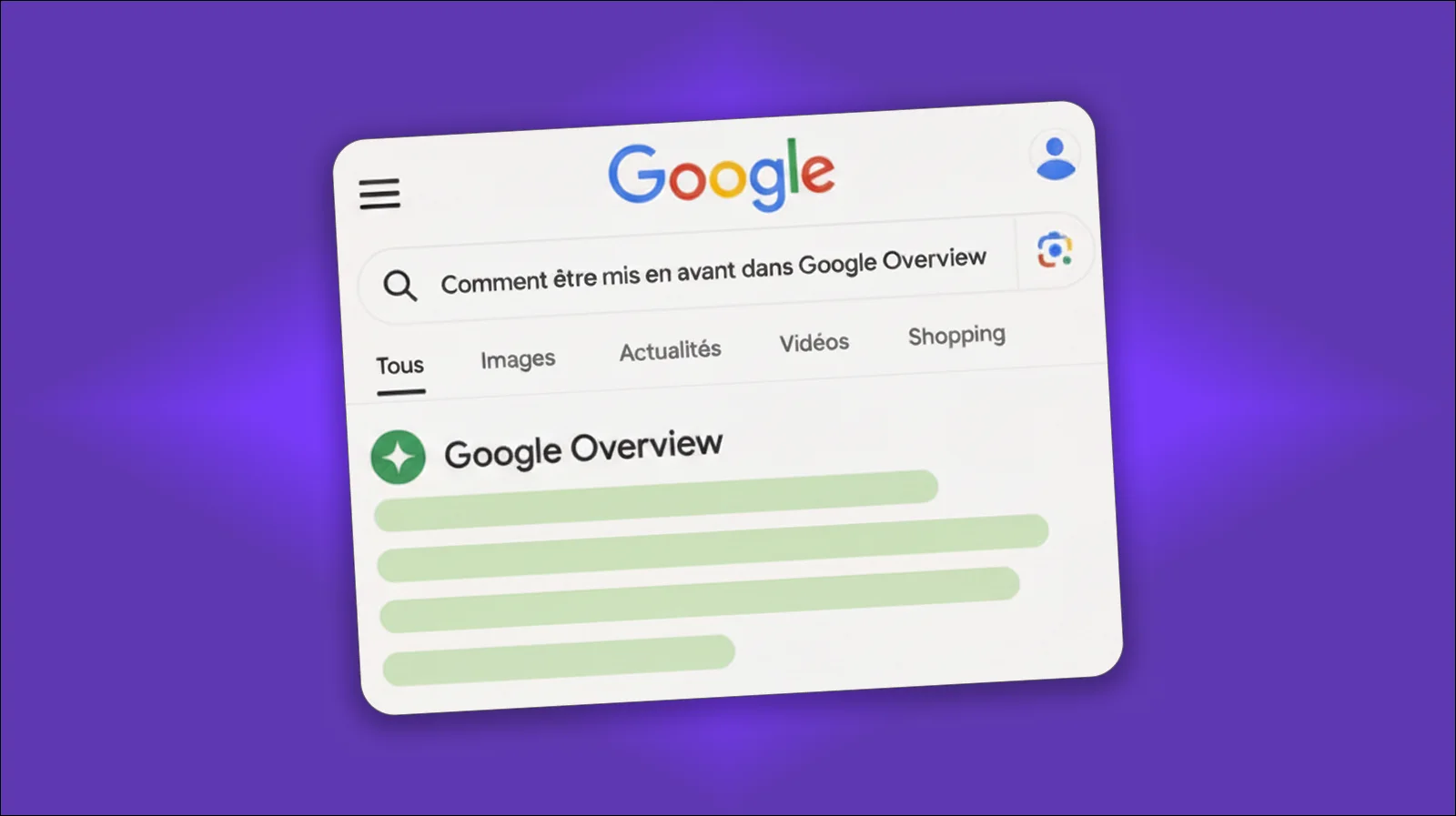
For nearly two years, France sat on the sidelines while the rest of the world watched its search results change. AI Overviews — Google's AI-generated summaries that sit above the traditional blue links — has been live in over 120 countries since 2024. France, tangled up in a legal dispute over publishers' neighboring rights, was one of the last major markets left waiting.
That wait is over. Google has confirmed AI Overviews and its conversational AI Mode will launch in France by September 23, 2026 at the latest. The countdown has started — and most French brands are not ready.
A deeper shift than just another update
It's tempting to file this under "SEO tweaks, again." It isn't. When AI Overviews goes live, a chunk of organic search traffic will be answered directly on the results page — no click required. Users get their answer, cite unseen, and move on. For brands that have spent years optimizing for position one, the rules of the game are shifting under their feet, in real time, over the next few months.
This is why the timing matters. Brands that start now have a genuine head start. Brands that wait until the feature is live will be reacting instead of leading — in a market where, as we've seen in the US and elsewhere, click-through rates on top organic positions can drop sharply once an AI summary appears above them.
First, let's set the name debate aside
Before going further: GEO, AI SEO, "IA-first content strategy" — call it whatever you want. The debate over the name is sterile. It's a question of vocabulary, not substance. What matters isn't what we call the discipline, it's what we concretely do to be visible wherever people are searching for information — including inside an AI-generated answer.
A new layer, in the continuity of a much older shift
This isn't the first time a brand has had to adapt to a new algorithm. In the 2000s, there was only the Google results page. Then came Bing, Amazon, YouTube, Reddit, TikTok — each with its own logic, each requiring brands to learn a new set of rules. Generative AI is one more source of influence added to that list. No more mysterious than the ones that came before it. No less either.
What's different this time is the speed and the stakes: France is about to compress two years of global adaptation into a single season.
Why there's no universal recipe, only reverse engineering
Anyone promising a single formula to "rank" in AI Overviews is selling something that doesn't exist, because there isn't one system to game. ChatGPT, Perplexity, Google AI Overviews, Claude — each one retrieves and weighs information differently. Serious work means empirically understanding how each system behaves, not repackaging an old SEO playbook with a new label.
This is the logic Surfer has applied from the start. The team built its expertise reverse-engineering Google's algorithms for SEO, then applied the same approach to LLMs. In practice: continuously measuring whether, where, and how a brand gets mentioned — on Google as much as in ChatGPT, Gemini, or AI Overviews — then identifying visibility gaps and turning every blind spot into an actionable content recommendation.
SEO still matters. It's just not enough anymore.
Here's the nuance worth holding onto: generative engines lean heavily on indexes that already exist — many of them built by years of SEO work. A well-structured site, with quality content and established authority, has a real head start when AI Overviews launches in France.
But structure and authority don't guarantee a citation. Being cited inside an AI-generated answer depends on additional, specific levers: how content is chunked and structured, whether a brand appears in the third-party sources these systems pull from, and how it's discussed across the web beyond its own domain.
This is the exact space Surfer was built to cover: content produced with the platform is twice as likely to reach the Top 10 within 30 days, and 25% more likely to be cited in AI answers — because the recommendations are based on the real signals that drive citation, not on assumptions.
Why this timeline changes the game for French brands
Google's rollout schedule turns this from a theoretical topic into an operational deadline. Once AI Overviews and AI Mode are live, part of the organic traffic French brands have spent years earning will be captured directly inside the results page, without a click through to the website.
For any brand still treating this as a future problem: it's about to become a live one, at the latest by September 23. The brands that ignore it are taking on a real business risk — not just a branding one.
An ecosystem of providers is taking shape, as with every new discipline
Every time a new, complex problem shows up, an ecosystem of tools and providers appears to help make sense of it. That's healthy and expected. It's also exactly where the trust question comes in: not every provider selling "AI visibility" services is delivering the same thing. Some are packaging real, empirical monitoring of how and why brands get cited. Others are repackaging generic SEO advice under a new acronym.
The honest version of this work isn't a magic formula — it's giving brands concrete visibility into how they're actually being cited by these systems, by whom, and why, so they can act on it deliberately.
A head start, ready to be claimed now
As with SEO in its early days, the brands that understand and act on this first will build a lead that's difficult for competitors to close later. France's AI Overviews launch isn't a distant trend anymore — it's a dated deadline. The question isn't whether to prepare. It's whether you'll be ready before or after it goes live.
Surfer, available in French since June 2026, already lets French marketing teams measure their presence across Google and LLMs before this deadline turns into an emergency.